
est. 2008

"We looked at the limitations of current VTOLs—they are rigid, built entirely around single use-cases. We realized that true aerial infrastructure needed to be as adaptable as the cities and emergency responders it serves. The clover design wasn't just about aerodynamics; it was about creating a universal, omnidirectional powertrain that could hot-swap from an executive air taxi to a high-capacity firefighting rig in a matter of minutes."
The Clover Wing VTOL bridges the gap between current technological capabilities and the futuristic demands of global mobility. As industries from urban logistics to emergency response push the boundaries of current transport frameworks, the need for heavy-lift, highly adaptable aerial vehicles has never been greater. Unlike traditional fixed-role drones and air taxis, the Clover Wing is designed as a foundational infrastructure platform, engineered to scale operations beyond the limitations of smaller delivery networks.
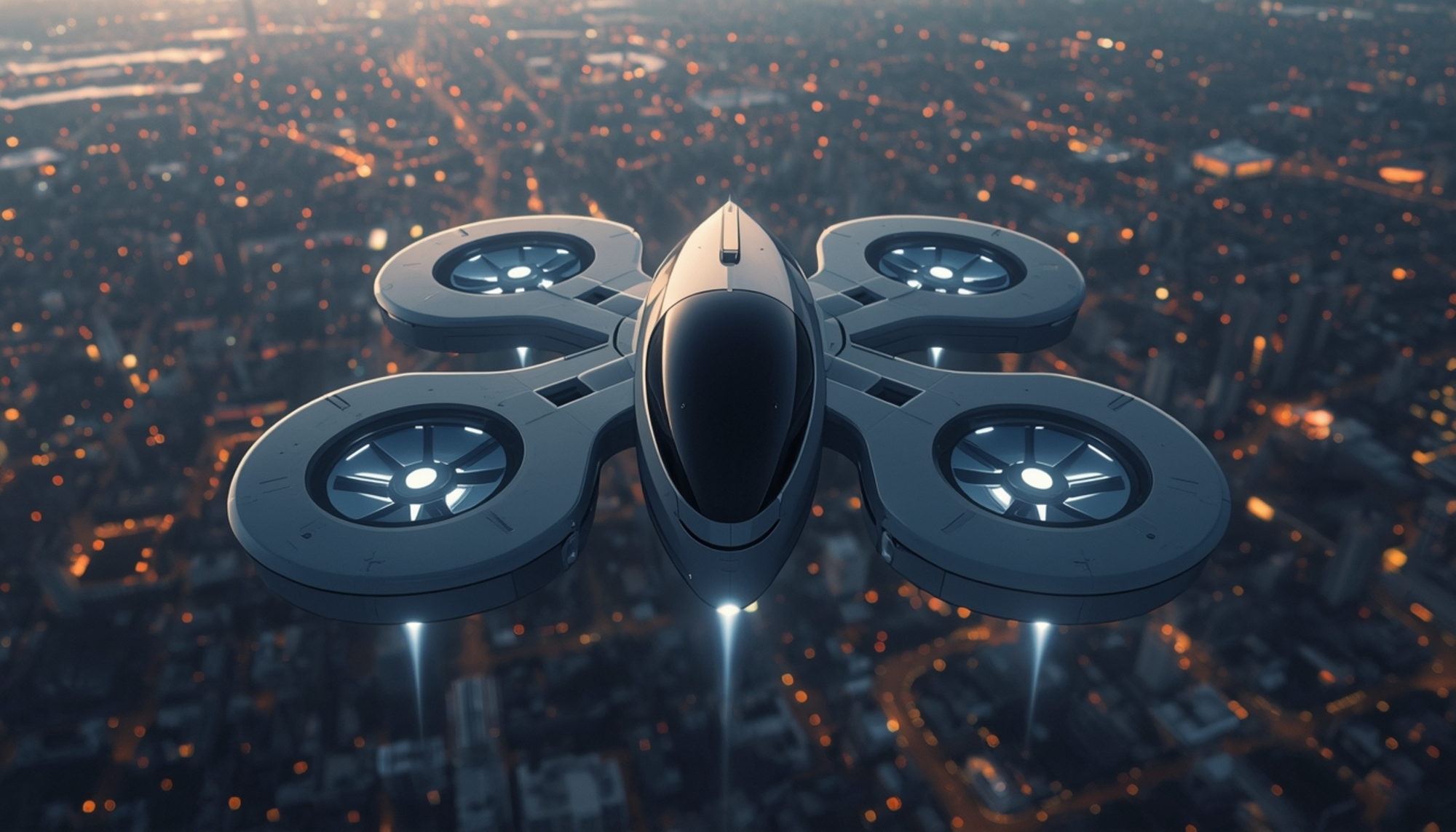
At its core, the aircraft introduces a paradigm shift in fuselage and powertrain design. By isolating the flight mechanics into a universal "Clover Wing" and separating the payload into hot-swappable cabins, it offers a sustainable, multi-mission footprint. Whether it's redefining commercial logistics for major delivery networks or deploying critical air ambulance services, the Clover Wing acts as a versatile backbone in the rapidly evolving aerial mobility landscape.
What is this designed to achieve at the highest level? What barriers does it break? What environments or scenarios does it serve? Keep this to one strong paragraph.
The Clover Wing VTOL is designed to achieve absolute operational versatility in both urban and austere environments. The central design revolves around the clover-shaped wing, featuring four leaves embedded with powerful thrusters that deliver unmatched omnidirectional control. This core component serves as a universal powertrain, allowing the aircraft to execute an expansive range of aviation tasks—from transporting 6-8 passengers in tight urban corridors to executing complex search and rescue missions—while bypassing the slow turnaround times of conventional single-purpose aircraft.
Beyond point-A-to-point-B transportation, the Clover Wing acts as a catalyst for systemic efficiency in public services and commercial logistics. By utilizing advanced AI for autonomous route planning and integrating hybrid power solutions, it minimizes the environmental and operational footprint of heavy-lift transport. Its ability to rapidly adapt to a crisis—transforming instantly into a firefighting unit or an air ambulance—elevates emergency response capabilities, ensuring that life-saving infrastructure is always ready to deploy exactly what is needed, the moment it is needed.
The Clover Wing VTOL is more than a novel aircraft; it's a fully modular aerial infrastructure platform. With its omnidirectional clover powertrain, hot-swappable payload architecture, and AI-driven hybrid power systems, the Clover Wing sets a new benchmark for versatility, safety, and sustainability. It bridges the gap between today's technology and tomorrow's mobility, proving that the future of aerospace lies in hardware that is as adaptable as the software that pilots it.


